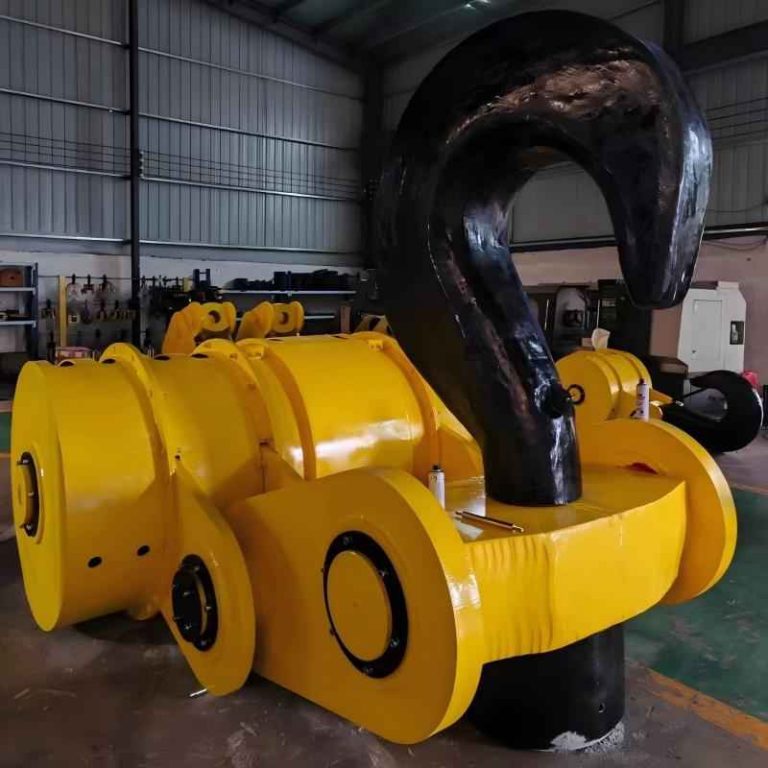

Understanding Stress Distribution in Heavy-Duty Crane Hooks
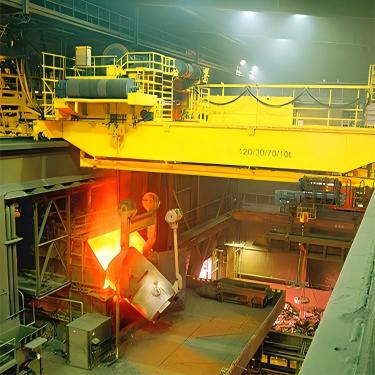
When engineers design lifting equipment for steel mills, ports, foundries, and heavy manufacturing plants, one factor receives more attention than almost any other: Stress Distribution in Heavy-Duty Crane Hooks. A crane hook is the final load-bearing component between the crane and the lifted object. If stresses are not distributed correctly, even premium materials can suffer fatigue cracks, permanent deformation, or premature failure after thousands of lifting cycles.
Di HL CRANE, we have spent years manufacturing heavy-duty crane components for demanding industrial applications. From forged crane hooks to crane wheels, wire rope drums, sheaves, and couplings, every component is engineered to deliver reliable performance under continuous heavy loads. Understanding how stress travels through a crane hook allows engineers to optimize both safety and service life while reducing long-term maintenance costs.
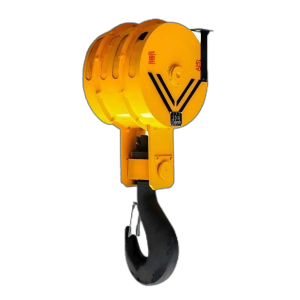
A crane hook may appear simple from the outside, yet its curved geometry represents decades of engineering development. Every radius, transition, and cross-sectional dimension directly influences how internal forces move through the material. The goal is not simply to make the hook stronger, but to distribute stress as evenly as possible so that no single area experiences excessive loading.
Why Stress Distribution Matters
Whenever a crane lifts a load, gravity creates tensile and compressive forces throughout the hook body. These forces are not evenly distributed. Instead, they follow the curved profile of the hook, producing localized stress concentrations that gradually weaken the material over time.
Poor stress distribution can result in:
- Fatigue cracking
- Permanent deformation
- Unexpected hook opening
- Reduced lifting capacity
- Increased maintenance costs
- Higher safety risks
By contrast, an optimized hook design distributes forces smoothly across the entire structure, minimizing peak stress and significantly extending fatigue life.
This is particularly important for cranes operating in A6, A7, and A8 duty classifications, where hooks may experience millions of lifting cycles during their service life.
How a Crane Hook Carries Load
Unlike straight structural members, crane hooks experience a combination of tensile stress, bending stress, and shear stress.
When the load is applied:
- The inner radius of the hook experiences the highest tensile stress.
- The outer curve carries comparatively lower stress.
- The hook shank transfers the load into the lifting mechanism.
- Transition areas experience complex stress patterns due to changes in geometry.
This combination of forces makes crane hooks one of the most carefully engineered components in any lifting system.
Modern engineering calculations are no longer based solely on theoretical formulas. Instead, designers combine analytical calculations with computer simulations to predict stress behavior under real working conditions.
Common Areas of Stress Concentration
Although the entire hook supports the load, several regions require special attention during design and manufacturing.
1. Inner Curvature
The inside radius carries the highest tensile stress during lifting.
This location is also the most common origin of fatigue cracks because every lifting cycle repeatedly stretches the material.
To reduce stress concentration, engineers carefully optimize the radius and cross-sectional profile rather than using sharp transitions.
2. Hook Throat
The hook throat experiences constant contact with shackles, lifting slings, or wire ropes.
Improper loading or side pulling increases localized stress and accelerates wear.
Routine inspection of this area is essential for maintaining safe lifting operations.
3. Hook Neck
The connection between the hook body and shank transfers enormous forces into the lifting mechanism.
Poor machining or abrupt dimensional changes can create stress raisers that shorten fatigue life.
Precision CNC machining helps eliminate unnecessary stress concentration in this critical region.
4. Threaded or Rotating Connection
For swivel hooks, additional stress develops around bearings and threaded assemblies.
Proper lubrication, machining accuracy, and dimensional control reduce both friction and mechanical stress.
Material Selection for Heavy-Duty Crane Hooks
Even the best-designed hook cannot perform reliably without suitable materials.
Industrial crane hooks are commonly manufactured from forged alloy steels because they combine strength, toughness, and fatigue resistance.
At HL CRANE, material selection depends on the customer’s application, operating environment, and duty cycle. Frequently used materials include:
- 42CrMo
- 35CrMo
- DG20Mn
- Customized alloy steels according to customer specifications
These materials provide:
- High yield strength
- Excellent impact toughness
- Superior fatigue resistance
- Stable mechanical properties after heat treatment
- Long service life under repeated heavy loading
For steel plants and foundries operating at elevated temperatures, selecting the correct alloy becomes even more important to maintain structural integrity over extended periods.
Why Forging Improves Stress Distribution
One of the most important manufacturing decisions is whether a crane hook should be forged or cast.
For heavy-duty lifting, forged hooks remain the preferred choice because the forging process aligns the metal grain flow with the hook’s curved geometry.
Compared with cast hooks, forged crane hooks offer:
- Higher tensile strength
- Better impact resistance
- Lower internal porosity
- Improved fatigue performance
- More uniform stress transfer
This structural advantage becomes increasingly valuable in applications involving frequent lifting cycles or shock loading.
At HL CRANE, forged crane hooks undergo controlled forging, precision machining, and strict quality inspection to ensure consistent mechanical performance before delivery.
Heat Treatment: Building Strength from Within
Material alone is not enough. Proper heat treatment is equally critical in controlling how stress is distributed and absorbed throughout the hook.
Processes such as quenching and tempering refine the steel’s microstructure, improving both strength and toughness. A well-executed heat treatment process helps the hook resist crack initiation while maintaining enough ductility to absorb impact loads without brittle failure.
For heavy-duty crane hooks used in harsh environments, balancing hardness and toughness is essential. Excessive hardness may increase brittleness, while insufficient hardness can lead to accelerated wear and deformation.
Finite Element Analysis (FEA): Visualizing Stress Before Manufacturing
Traditional engineering formulas provide a solid foundation for crane hook design, but modern manufacturers increasingly rely on Finite Element Analysis (FEA) to evaluate stress distribution with much greater accuracy. FEA divides a three-dimensional crane hook model into thousands of small elements, allowing engineers to simulate how the hook behaves under different loading conditions.
Through FEA, designers can identify high-stress regions before production begins. If excessive stress appears around the hook throat, neck, or shank, the geometry can be optimized by adjusting cross-sectional dimensions, transition radii, or material thickness. This proactive approach helps eliminate weak points while reducing unnecessary weight.
Di HL CRANE, FEA is an important part of the engineering process for customized crane hooks used in steel plants, foundries, ports, and other heavy-duty industries. Simulation results are combined with practical manufacturing experience to produce hooks that balance strength, durability, and cost-effectiveness.
Manufacturing Quality Control: Every Process Matters
Even the most advanced design cannot guarantee reliable performance without strict manufacturing quality control. Every stage—from raw material inspection to final testing—has a direct impact on the structural integrity of a heavy-duty crane hook.
HL CRANE follows a comprehensive production process that typically includes:
- Certified alloy steel procurement
- Precision closed-die forging
- CNC machining for critical dimensions
- Controlled quenching and tempering
- Surface finishing and anti-corrosion treatment
- Inspeksi dimensi
- Mechanical property testing
- Pengujian non-destruktif (NDT)
- Final quality inspection before shipment
These procedures ensure that each hook meets customer specifications and performs reliably under demanding operating conditions.
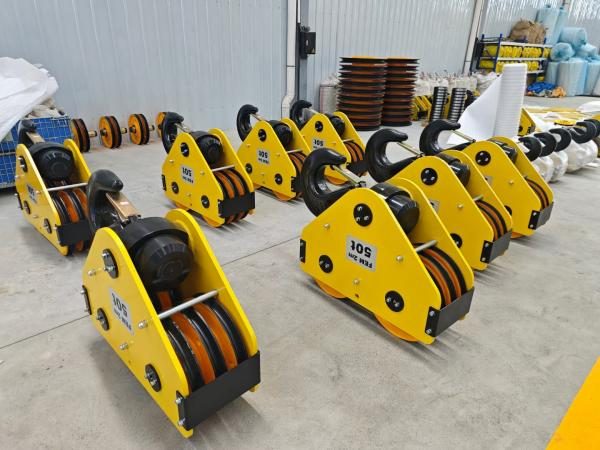
Customers looking for complete lifting solutions can also explore HL CRANE’s Kait Derek product range:
https://www.hnhlcrane.com/product/crane-hook/
Because crane hooks work together with other lifting components, selecting compatible parts is equally important. Our Crane Sheaves are engineered to provide smooth rope guidance and reduce unnecessary stress on both the hook and wire rope:
The Importance of Non-Destructive Testing (NDT)
Heavy-duty crane hooks are safety-critical components. Internal defects that are invisible to the naked eye may eventually develop into serious failures if left undetected.
For this reason, HL CRANE performs various non-destructive testing methods depending on customer requirements, including:
Pengujian Ultrasonik (UT)
UT detects internal cracks, inclusions, and forging defects without damaging the component.
Pengujian Partikel Magnetik (MT)
MT identifies surface and near-surface cracks, especially in highly stressed regions such as the hook throat and neck.
Hardness Testing
Hardness measurements verify that heat treatment has produced the required mechanical properties throughout the hook.
Dimensional Inspection
Critical dimensions are inspected using calibrated measuring equipment to ensure compliance with engineering drawings.
Together, these inspections significantly improve product reliability and reduce the risk of unexpected failures during service.
Inspection and Preventive Maintenance
Even a perfectly manufactured crane hook requires regular inspection throughout its service life. Repeated lifting cycles gradually accumulate fatigue damage, making preventive maintenance essential for safe operation.
Operators should routinely inspect crane hooks for:
- Permanent deformation
- Increased hook opening
- Surface cracks
- Excessive wear
- Korosi
- Deep scratches or impact damage
- Bearing wear (for swivel hooks)
Menurut Administrasi Keselamatan dan Kesehatan Kerja (OSHA), lifting components should be inspected regularly, and damaged hooks must be removed from service immediately to prevent accidents.
Reference:
https://www.osha.gov/cranes-derricks
In addition, engineering practices published by the American Society of Mechanical Engineers (ASME) provide internationally recognized guidance for crane component design, inspection, and safe operation.
Reference:
https://www.asme.org
Following these recommendations helps extend equipment life while improving workplace safety.
Selecting the Right Crane Hook for Your Application
Choosing a crane hook is about far more than matching the rated lifting capacity. Engineers should consider the complete operating environment, including:
- Crane duty classification (A3–A8)
- Load spectrum
- Lifting frequency
- Operating temperature
- Side loading conditions
- Shock loading
- Corrosive environments
- Applicable international standards
For example, crane hooks used in steel mills or foundries often operate under high temperatures and continuous duty cycles, requiring alloy steels with excellent toughness and fatigue resistance. Port cranes and shipyard cranes, on the other hand, may require enhanced corrosion protection to withstand humid and salt-laden environments.
At HL CRANE, every customized solution is developed according to the customer’s working conditions rather than relying on a one-size-fits-all design.
Integrating Crane Hooks with the Entire Lifting System
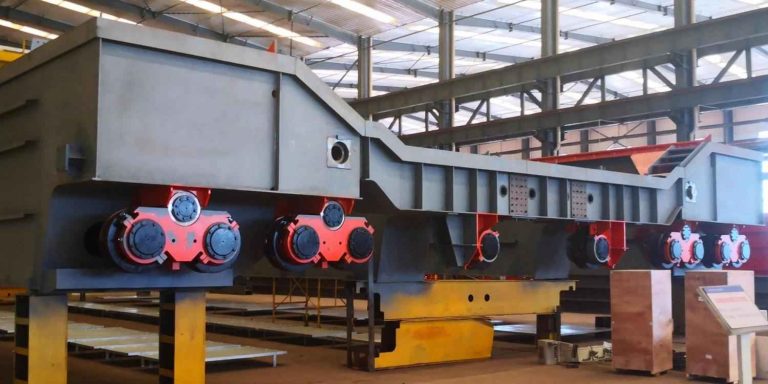
A crane hook is only one part of a complete lifting mechanism. The overall performance of the crane depends on the quality and compatibility of all major components.
To achieve optimal reliability, HL CRANE also manufactures:
- Roda Derek
https://www.hnhlcrane.com/products/crane-wheel/ - Drum Tali Kawat
https://www.hnhlcrane.com/products/crane-drum/ - Drum Gear Couplings
https://www.hnhlcrane.com/product/drum-gear-coupling/
When these components are engineered to work together, stress is distributed more evenly throughout the lifting system, improving safety, reducing maintenance, and extending equipment life.
Mengapa Memilih HL CRANE?
With years of experience in manufacturing heavy-duty crane components, HL CRANE serves customers across industries including steel production, mining, shipbuilding, ports, power plants, and heavy machinery manufacturing.
Keunggulan kami meliputi:
- Professional engineering support
- Customized hook design
- High-quality forged alloy steel
- Precision CNC machining
- Advanced heat treatment
- Comprehensive NDT inspection
- ISO-compliant quality management
- Worldwide export experience
- Fast technical response
Our mission is to provide reliable crane components that help customers achieve safer lifting operations and lower life-cycle costs.
Kesimpulan
Understanding Stress Distribution in Heavy-Duty Crane Hooks is essential for designing lifting equipment that is both safe and durable. From material selection and forging to heat treatment, FEA simulation, and rigorous inspection, every stage of the manufacturing process influences how stress is transferred through the hook.
By minimizing stress concentration and optimizing structural geometry, manufacturers can significantly improve fatigue life and reduce maintenance requirements. Combined with routine inspections and proper application-specific design, a high-quality forged crane hook can deliver reliable performance for many years, even under the most demanding industrial conditions.
Di HL CRANE, we are committed to supplying engineered crane hooks and lifting components that meet the highest standards of quality, safety, and performance. Whether you require a standard forged hook or a fully customized solution, our engineering team is ready to support your project with dependable products and professional expertise.
Pertanyaan yang Sering Diajukan (FAQ)
1. Why is stress distribution important in heavy-duty crane hooks?
Proper stress distribution reduces localized stress concentration, improves fatigue life, enhances lifting safety, and minimizes the risk of structural failure during repeated lifting operations.
2. What material is best for heavy-duty crane hooks?
Forged alloy steels such as 42CrMo, 35CrModan DG20Mn are widely used because they offer an excellent balance of strength, toughness, and fatigue resistance.
3. How does FEA improve crane hook design?
Finite Element Analysis (FEA) allows engineers to simulate real-world loading conditions, identify stress concentration areas, and optimize the hook’s geometry before manufacturing begins.
4. How often should crane hooks be inspected?
Inspection frequency depends on the crane’s duty cycle and applicable standards. Daily visual inspections, scheduled non-destructive testing, and periodic dimensional checks are recommended for heavy-duty applications.