
Common Installation Mistakes That Shorten the Lifespan of Crane Parts
In the crane industry, component quality is only half of the equation. Even the most precisely manufactured parts can fail prematurely if installed incorrectly. At HL CRANE, we have seen many cases where improper installation—not material defects—was the root cause of failure.
Understanding these common mistakes can help reduce downtime, lower maintenance costs, and significantly extend the service life of your equipment.
1. Improper Alignment of Couplings
One of the most frequent issues occurs during the installation of couplings. Misalignment between shafts can lead to excessive vibration, noise, and accelerated wear.
For example, when installing a gear coupling, even a small angular or parallel misalignment can cause uneven load distribution. Over time, this results in tooth wear and eventual failure.
To avoid this, always use precision alignment tools and verify tolerances according to manufacturer specifications. If you are sourcing high-quality couplings, you can refer to our detailed product page:
👉 https://www.hnhlcrane.com/products/crane-coupling/
2. Incorrect Installation of Crane Wheels
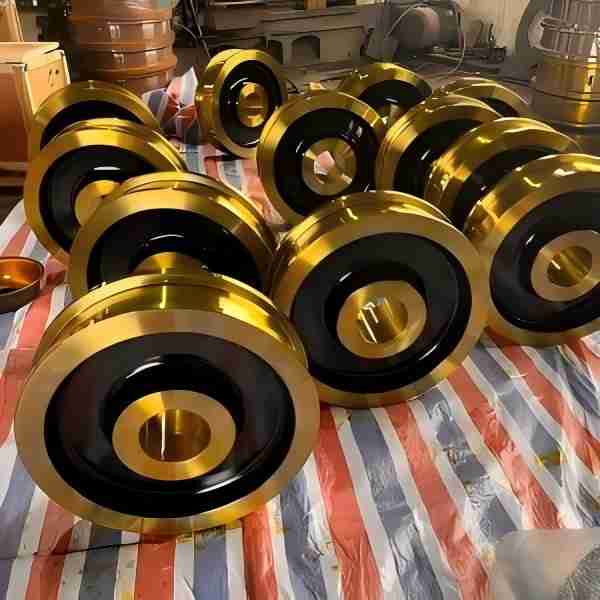
Crane wheels are designed to operate under heavy loads and constant movement. However, improper installation—such as incorrect gauge distance or poor bearing fitting—can drastically reduce their lifespan.
A common mistake is forcing the wheel onto the shaft without proper heating or tolerance checks. This can damage the bore or create internal stress.
Additionally, misaligned wheels can cause rail wear and increase rolling resistance, which affects the entire crane system.
3. Poor Lubrication Practices
Lubrication is often overlooked during installation. Either too little grease or the wrong type of lubricant can lead to severe consequences.
For components like crane drums and bearings, insufficient lubrication increases friction and heat, accelerating wear. On the other hand, over-lubrication can cause leakage and contamination.
It is essential to follow the recommended lubrication schedule and use the correct grade of grease. You can learn more about lubrication standards from industry resources such as:
👉 https://www.machinerylubrication.com/
4. Improper Mounting of Crane Drums
Crane drums are critical for wire rope operation. Incorrect installation can lead to uneven winding, rope damage, and even safety hazards.
One typical issue is improper positioning of the drum relative to the pulley system. If the alignment is off, the wire rope will not spool evenly, leading to localized stress and premature failure.
At HL CRANE, we manufacture precision-engineered drums designed for durability. You can explore our solutions here:
👉 https://www.hnhlcrane.com/products/crane-drum/
5. Ignoring Torque Specifications
Many installers underestimate the importance of proper torque during assembly. Over-tightening bolts can cause deformation, while under-tightening can lead to loosening during operation.
This is especially critical for structural connections and rotating components. Always use calibrated torque tools and follow the specified values provided by the manufacturer.
6. Lack of Installation Inspection
Another common mistake is skipping the final inspection after installation. Even if each step appears correct, small errors can go unnoticed without a systematic check.
A proper inspection should include:
- Alignment verification
- Fastener torque checks
- Lubrication confirmation
- Test operation under no-load conditions
These steps ensure that the crane operates safely and efficiently from the start.
7. Using Unqualified or Inexperienced Installers
Finally, human factors play a significant role. Installation performed by untrained personnel often leads to multiple hidden issues.
Professional installation teams understand tolerances, load distribution, and safety requirements. Investing in skilled labor can prevent costly repairs in the future.
Conclusion
Crane parts are designed for durability, but their actual lifespan depends heavily on correct installation practices. From coupling alignment to lubrication and inspection, every detail matters.
By avoiding these common mistakes, you can maximize equipment performance and reduce long-term costs.
At HL CRANE, we not only provide high-quality crane components but also support our clients with technical guidance and customized solutions. If you are looking for reliable crane parts, feel free to visit:
👉 https://www.hnhlcrane.com/
FAQ
1. What is the most common mistake when installing crane parts?
The most common mistake is improper alignment, especially in components like couplings and shafts. Misalignment can cause vibration, uneven load distribution, and premature wear, significantly reducing the lifespan of crane parts.
2. How does poor lubrication affect crane components?
Poor lubrication increases friction and heat, which accelerates wear on critical components such as bearings, crane drums, and gears. Using the wrong type of lubricant or applying too little (or too much) can lead to early failure and higher maintenance costs.
3. Why is proper installation of crane wheels important?
Correct installation ensures smooth movement and even load distribution. Misaligned or improperly fitted crane wheels can damage rails, increase resistance, and shorten the service life of both the wheels and the entire crane system.
4. How can I extend the lifespan of crane parts after installation?
To extend the lifespan, ensure proper alignment, follow correct torque specifications, apply suitable lubrication, and perform a thorough inspection after installation. Regular maintenance and periodic checks are also essential for long-term performance.
5. Is professional installation necessary for crane components?
Yes, professional installation is highly recommended. Experienced technicians understand proper tolerances, alignment, and safety requirements, which helps prevent hidden issues and ensures optimal performance of crane parts.